Nanopesticides Market Size & Forecast
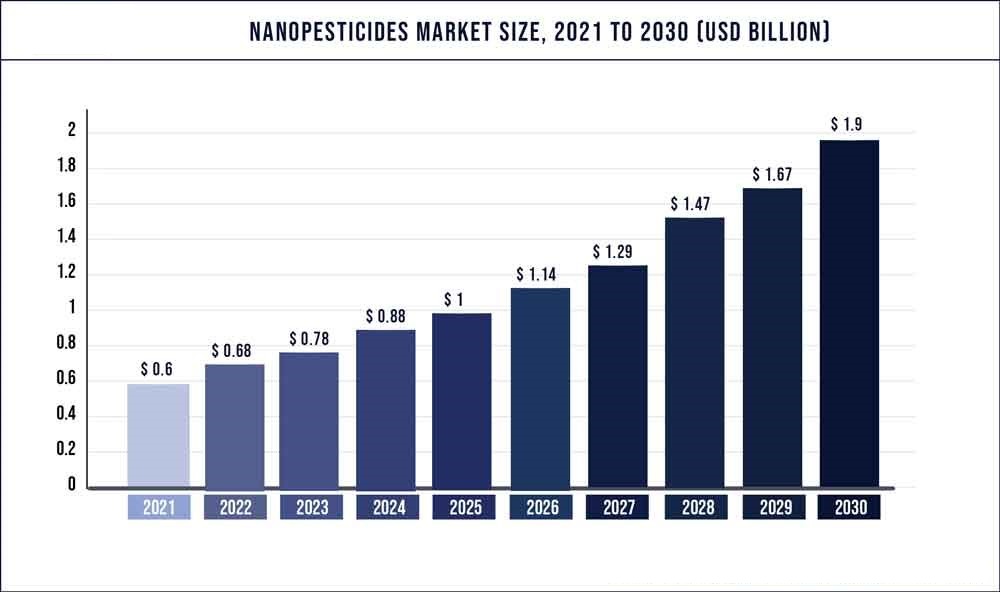
Nanopesticides Market size was valued at USD 0.52 Billion in 2021 and is projected to reach USD 1.58 Billion by 2030, growing at a CAGR of 12.5% from 2023 to 2030.
The demand also meets the requirement for seasoned and unseasoned goods to be offered worldwide all year. As a result, agro-economic nations are focused on exporting vegetables and fruits to close the demand gap, boosting the need for the use of nano pesticides in the packing of these fresh items to reduce supply chain losses and retain product freshness. Nanopesticides can be developed from different types of nanomaterials. These include chitosan nanoparticles and various carbon nanostructures, such as graphene and its derivatives, carbon nanodots, carbon nanotubes, and others. Also, chitin, micelles, clay derivatives, synthetic clays, activated carbon, zeolites, silica, and others have been used to produce host-guest nano pesticides.
Nano Fertilizers Market Size & Forecast
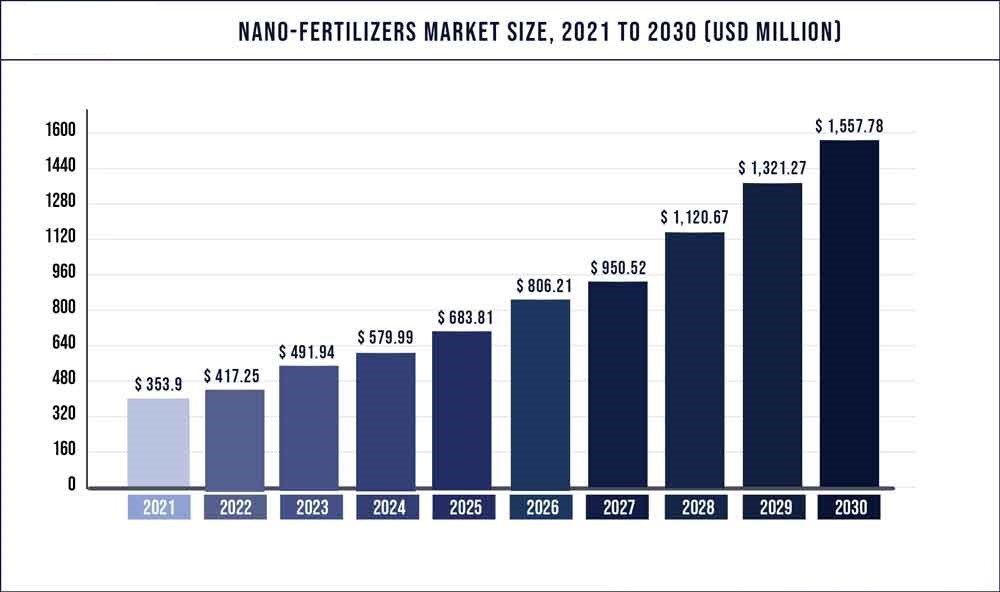
Nano Fertilizers Market size was valued at USD 3,013.01 Million in 2022 and is projected to reach USD 9,095.98 Million by 2030, growing at a CAGR of 14.81% from 2023 to 2030.
The growing use of efficient fertilizers and fertigation methods is the key cause for the rising demand for nano fertilizers. Most recent crop vitamins provide crops with optimum rates of nutrient content during the development phase in the most effective way possible, without damaging water resources or soil, which is projected to boost the need for effective fertilizers with a lower impact on soil quality. The rising demand for nano fertilizers has compelled industry participants to innovate and broaden their product offers.
Growth Factors
The use of nanofertilizers can reduce the consumption of chemical fertilisers by 80-100 times, decreasing unneeded chemical fertiliser imports by a country. The demand for Nano Urea is increasing significantly throughout the world since it can replace regular Urea while giving a lower input cost, higher crop yield, and a higher charge because to the higher-quality produce. Nano Urea is expected to replace 13.7 million litres of regular urea usage over the next five years, while IFFCO has also begun testing of nano version of DAP fertilisers. It also offers a lot of advantages in terms of relative transportation and storage costs, and farmers may simply raise bottles of Nano Urea physically rather than cumbersome Urea bags. Nano Urea is a viable and long-term alternative to typical bulk nitrogenous fertilisers such as urea.
Pesticide Market in India
Forecast & Analysis 2023-2027
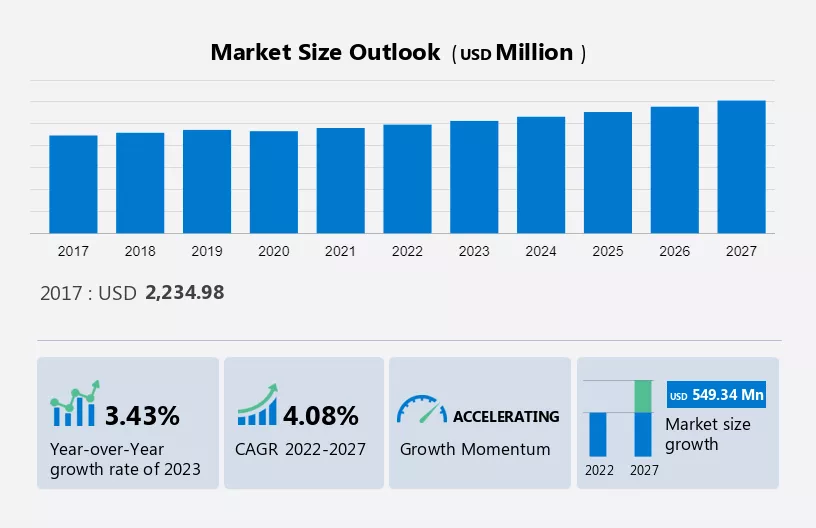
The pesticide market in India is estimated to grow at a CAGR of 4.08% between 2022 and 2027. The size of the market is forecast to increase by USD 549.34 million. The growth of the market depends on several factors, including Increased use of herbicides, Rise in demand in India, and Shrinking arable land.
India Biopesticides Market - Industry Trends & Forecast Report 2028
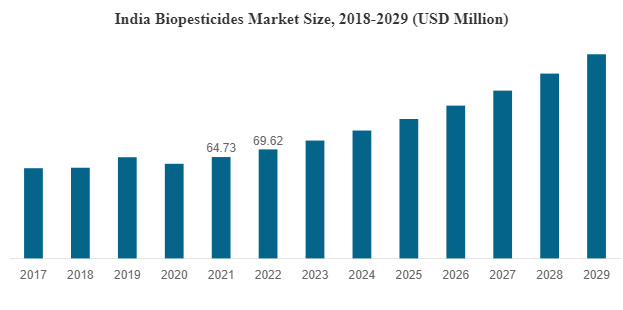
India Biopesticides Market was worth USD 88.2 million in 2021 and is further projected to reach USD 191.58 million by the year 2028, exhibiting a CAGR of 11.7% during the forecast period (2022-2028). The rapid expansion of the market is predominantly due to the rapidly growing preferences for high-quality organic food. Also, rising demand for biopesticides by farmers, since it grows faster than conventional chemical pesticides. Moreover, the excess use of chemical products in agriculture contaminates the soil and is harmful to human health. To reduce all these risks and pollution problems, eco-friendly biopesticides are rapidly growing in India. Additionally, the vast agricultural diversity and arable land in India are expected to provide significant growth opportunities for biopesticides market participants. Furthermore, market participants are spending on research and development to offer creative solutions and enhance the quality of the product. All these factors propel the growth of the India Biopesticides Market during the forecast period (2022-2028).
India Biofertilizers Market Growth to Reach USD 243.61 Million by 2029 | India Biofertilizers Industry to Register a CAGR of 12.02% by 2022-2029
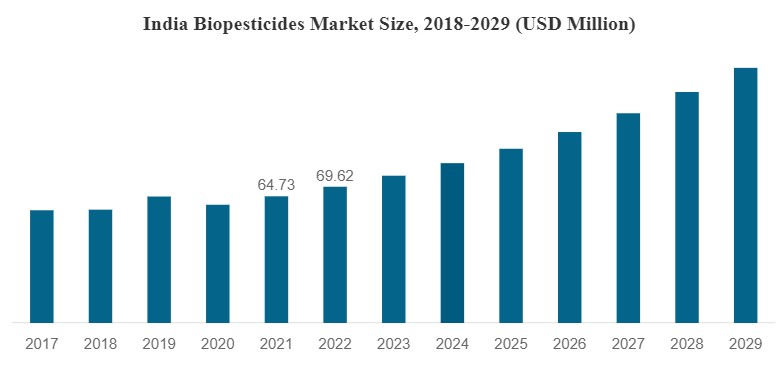
The India biofertilizer market size reached US$ 111.3 Million in 2022. Looking forward, IMARC Group expects the market to reach US$ 221.4 Million by 2028, exhibiting a growth rate (CAGR) of 12.5% during 2023-2028.
Biofertilizers are natural fertilizers containing living microorganisms. Some of the common biofertilizers include rhizobium, azotobacter, azospirillum, and blue-green algae (BGA). They are applied to soil and seed, wherein the microbes colonize the rhizosphere of the plant to increase the supply of primary nutrients. Along with this, they employ natural processes of nitrogen fixation, solubilizing phosphorus, and growth-promoting substances, which, in turn, stimulates plant growth.
As compared to chemical fertilizers, biofertilizers restore the natural nutrient cycle of the soil, build organic matter, and enhance the sustainability and health of the soil. Apart from this, they are eco-friendly and cost-effective, due to which they are extensively used in organic farming practices.
Global Organic Fertilizer market 2021-2031
(Animal-based Organic Fertilizers (Blood Meal, Animal Manure, Bone Meal, Other Animal-based Organic Fertilizers), Plant-based Organic Fertilizers (Green Manure, Seaweed Extract, and Other Plant-based Organic Fertilizers), Mineral-based Organic Fertilizers (Rock Phosphate, Silica, Other Mineral-based Organic Fertilizers), and Other Organic Fertilizers), by Form (dry organic fertilizers (Granular Organic Fertilizers, Organic Fertilizer Pellets, Organic Fertilizer Powders, and Other Dry Organic Fertilizers) and liquid organic fertilizers), by Application (broadcasting, fertigation and foliar application and other application methods), by Crop Type (cereals & grains (Wheat, Maize/Corn, Rice, and Other Cereals & Grains), fruits & vegetables, oilseeds & pulses, turf & ornaments and other crops)
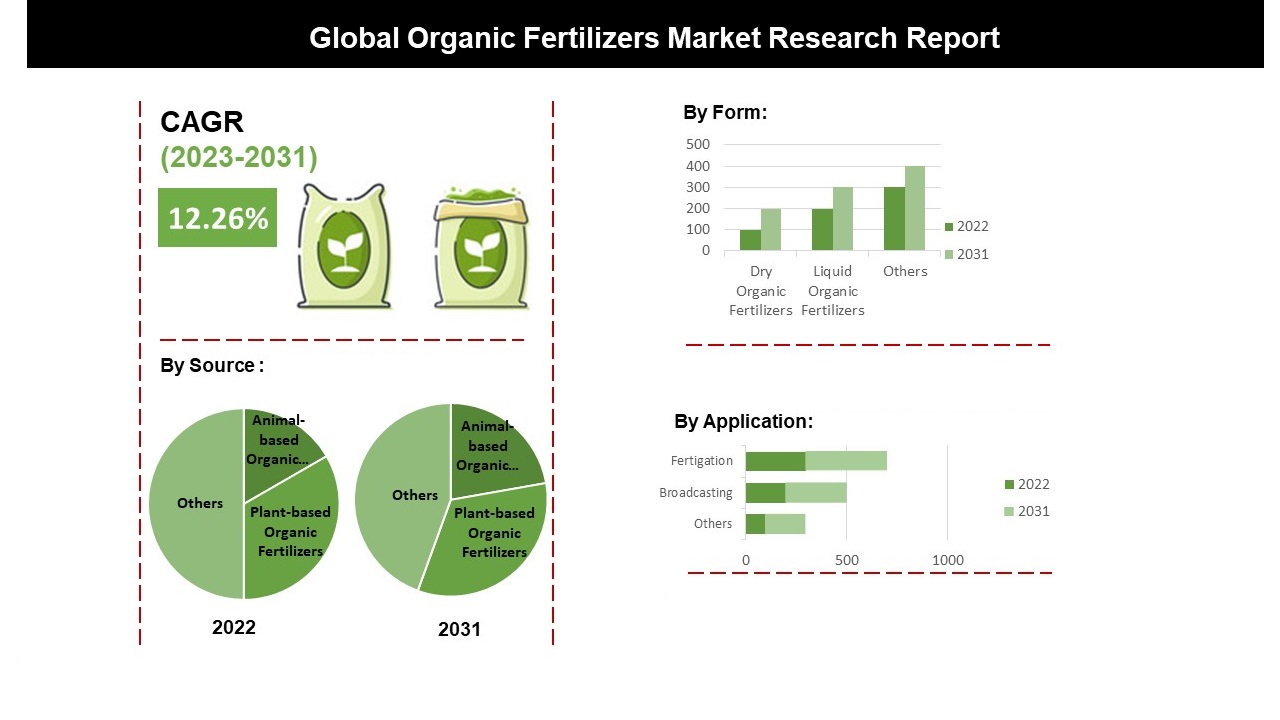

Global Organic Fertilizer Market
(Animal-based Organic Fertilizers (Blood Meal, Animal Manure, Bone Meal, Other Animal-based Organic Fertilizers), Plant-based Organic Fertilizers (Green Manure, Seaweed Extract, and Other Plant-based Organic Fertilizers), Mineral-based Organic Fertilizers (Rock Phosphate, Silica, Other Mineral-based Organic Fertilizers), and Other Organic Fertilizers), by Form (dry organic fertilizers (Granular Organic Fertilizers, Organic Fertilizer Pellets, Organic Fertilizer Powders, and Other Dry Organic Fertilizers) and liquid organic fertilizers), by Application (broadcasting, fertigation and foliar application and other application methods), by Crop Type (cereals & grains (Wheat, Maize/Corn, Rice, and Other Cereals & Grains), fruits & vegetables, oilseeds & pulses, turf & ornaments and other crops